
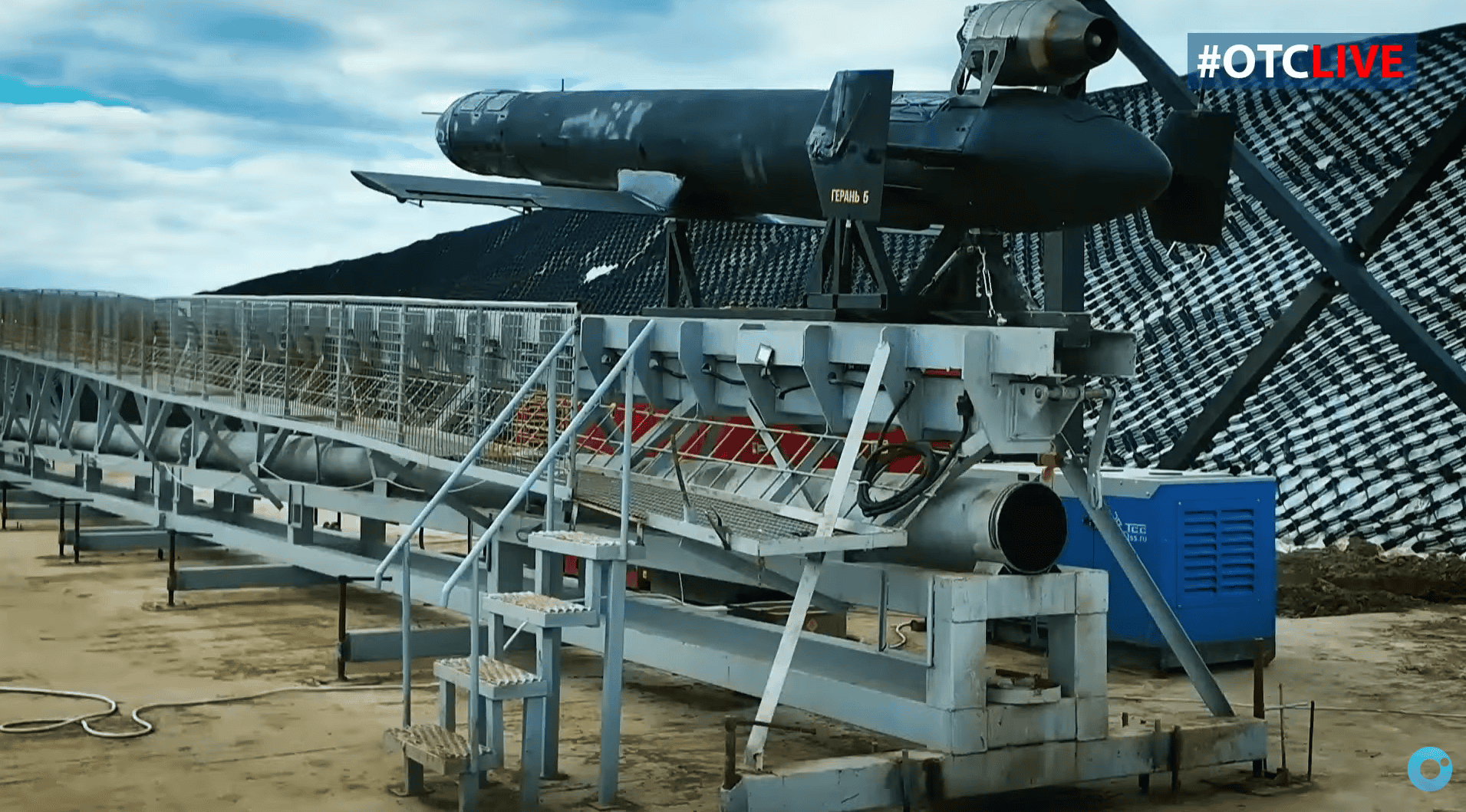
Russia’s Geran-5 jet-powered attack drone. Source: Militarnyi / OTC LIVE
In a factory north of the sleepy city of Yelabuga, Tatarstan, 800 kilometers east of Moscow, machines churn for 24 hours a day, producing one of the most economically disruptive weapons currently deployed in combat. It’s not often that the West looks to Russia for technology, but four years of industrialized warfare have transformed the nation into a gritty research laboratory.
Far from being a celebration of a war that has killed and displaced millions, this is a look at one technology, the industry behind it, and what we might learn from both.
Geran
Russia invaded Ukraine in February 2022, and fairly early on, identified a need that normal short-range FPV (first-person view) drones could not fill: a weapon that could strike targets deep behind enemy lines, that was also cost-effective and easily mass-produced. In August of that year, it turned to Iran to acquire the Shahed-136 attack drone, which could carry a payload of 50 kg of munitions for a range of 1,000 km. This fairly simple propeller-driven drone was renamed the Geran-2.
Immediately proving itself valuable, Russia established domestic production of the platform in its Alabuga Special Economic Zone in Tatarstan the following year. Although the project began as assembly of Iranian-sourced components, Russian engineers rapidly iterated on propulsion, navigation, communications, and payload, particularly in response to Ukrainian countermeasures. Now, in 2026, the Geran-4 and 5 represent a meaningful step up in lethality, after nearly 4 years of continuous feedback and development directly from the battlefield.
Interestingly, the Shahed also also been the basis for both US and Chinese military drone projects, neither of which are as significant as Geran.
Geran was essentially imported under license from Iran and then production was localized, primarily as design and final assembly. This began with the airframe, made of fiberglass, carbon fiber, and honeycomb composite. Russian and Belarusian companies provided structural materials, while electronics, carbon fiber, and industrial equipment were purchased from China. There is evidence that jet-powered development was primarily based on Iranian innovation rather than anything specific to Alabuga or Russia.
Early on, Iranian aerospace engineers and officials visited Tatarstan, and vice versa, for knowledge transfer. Initially, Russia had difficulty finding qualified electronic warfare and drone engineers. This was supplemented first via Iran, and later through a direct talent pipeline at Alabuga Polytechnic College, where students as young as 16 were employed in manufacturing, alongside workers from various other nations.
Practicality Over Perfection
Over four years, the Ukraine War has become perhaps unexpectedly attritional, both in the cost of lives and economically. In 2022, battles were determined largely by tanks, artillery, and conventional munitions. By 2026, while still important, these weapons are accompanied increasingly by comparatively low-cost drones and other unmanned systems that are easily replaced. More importantly, as countermeasures are deployed and updated on a week-by-week basis, the most successful platforms are those that can be iterated on accordingly, at low cost.
Ukraine deployed two groups of countermeasures that forced Russia to upgrade. These were rolled out in incremental changes over years, not in large packages.
Electronic systems, including GPS jamming and spoofing, disrupted Geran drone navigation, forcing Russia to upgrade cellular communication, cameras, and add mesh networks. In early 2026, nearly half of drone attacks could be neutralized this way.
Physical interception systems, such as trained machine gun teams, helicopters, and inexpensive interceptor drones such as the Sting, were particularly effective against the Geran-2, which flew at up to 180 kph. Newer models, including the jet-powered Geran-3, 4, and 5, can fly at up to 600 kph.
It’s worth contrasting this entire approach with that of the United States military and its defense contractors, which has generally been to build sophisticated systems that are unmatched by foreign counterparts- often with an associated cost. This approach has kept the US military in a relatively unassailable position for decades. However, the 2026 Iran War has exposed limitations to this strategy: within weeks of fighting in this single theater, the US expended large portions of its advanced missiles and interceptors, which could take years to replace.
“I don’t want to put a million-dollar missile on a five-dollar tent.”
- President George W. Bush, 2001
Lethality is not a concern here; industrial capacity and practicality are. Elements of modern US military strategy clearly favor a short and overwhelming conflict, and fall short when a war becomes attritional- which seems to be the nature of many modern conflicts. Effectiveness of these weapons is limited by how readily they can afford to be deployed, how quickly they can be replaced, and how many will exist the next day.
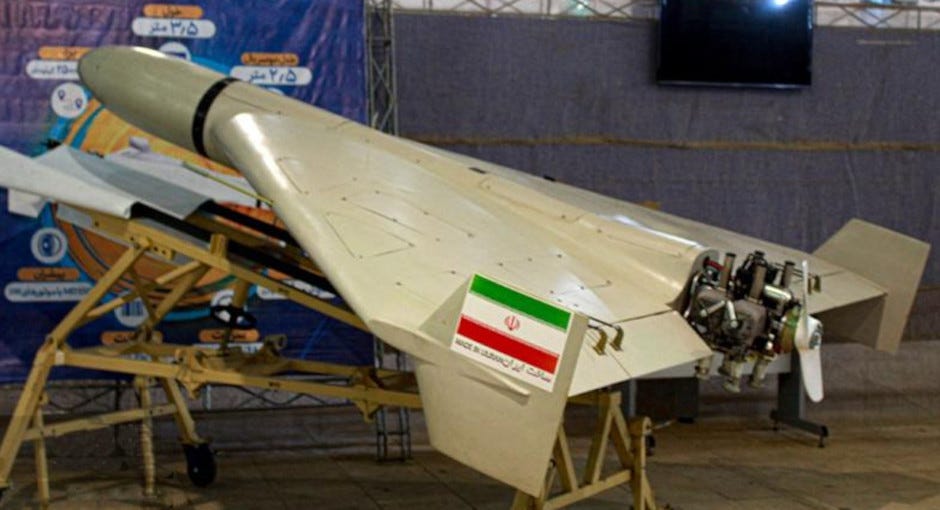
Iran’s propeller-driven Shahed-136 attack drone, the basis for the Russian Geran series. Source: Hisutton
The takeaway for other nations is not to trade sophistication for cheaper weapons. It’s to take realistic manufacturability and lead times into consideration when developing weapons platforms, and perhaps to introduce pragmatic and adaptable platforms that can be quickly and cheaply iterated on. Russia’s Geran program captures all of these advantages, and does so in an otherwise unremarkable industrial town. Especially in a prolonged war, the feedback loop between battlefield, engineer, and factory matters as much as face-value lethality.
Beyond Geran
Although Russia’s overall economy remains heavily oriented toward natural resources, and its technology sector lags behind some peer economies, it has a growing hard tech space, comprised of incumbents like Yandex, as well as startups. Many Russian organizations in this category appear committed to solving practical problems that the country currently faces, and operate in near-total isolation from Western ecosystems.
Bureau 1440. Roughly analogous to Starlink, they have launched 32 commercial low-Earth-orbit satellites, with a goal of starting broadband service in 2027. 3,500 employees, 80% in technical roles.
Ushkuynik. A research and production nonprofit rather than a company, they have developed a fiber optic cable-controlled drone that is immune to frequency jamming, and have distributed assembly operations across Russia. This is specifically a solution to problems observed in war.
PICsTech. Founded out of Skolkovo Institute of Science and Technology, this startup has successfully developed photonic integrated circuits, looking to build telecom equipment and reduce dependency on foreign imports.


Addendum: Unit Economics
A quick breakdown of costs for the Geran program (data as of October 2026).
Geran-5 unit cost: $100-150k USD
Geran-2 unit cost: $20-30k USD
Geran-4 and 5 monthly production: 3,000 units (combined- perhaps 800 per month for Geran-5)
Geran-2 monthly production: 2,800 units
Total annualized cost (high estimates):
Geran-4/5: $5.4B USD
Geran-2: $1B USD
Meanwhile, it costs the US $2M per unit to produce a Tomahawk missile; ~60 are produced per year (2022 data). It’s not a perfect comparison- peace vs wartime data and different munition loads and strike ranges, but it does show trade-offs in per-unit cost, replacement rate, and platform flexibility.
Importantly, the US has launched an affordable-missile initiative targeting production of 27,000 cruise missiles at a cost of $218k each over the next 5 years.
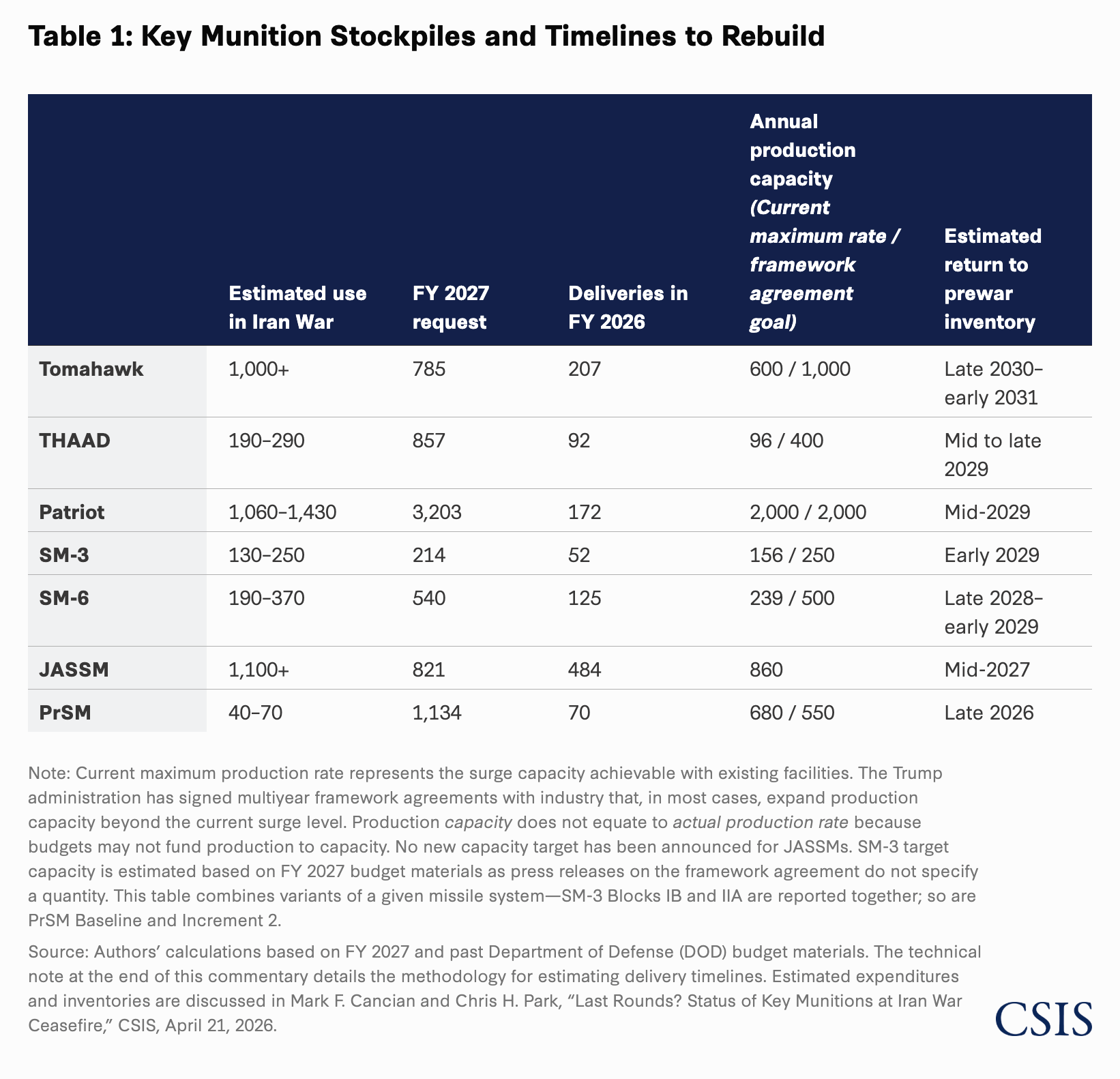
Below is data on US missile stockpile rebuild timelines during the Iran War.